

▌Nanofluidic membranes: Discover a new avenue in membrane-based processes — A comprehensive review
奈米流體薄膜:開創薄膜基製程的新方向——全面性綜述
S. N. Ashrafizadeh*, L. H. Yeh*, M. Khatibi*, P. Shahhoseini* and Y. C. Li
https://doi.org/10.1016/j.cis.2026.103808
SEED Member: L. H. Yeh
Major Contributions
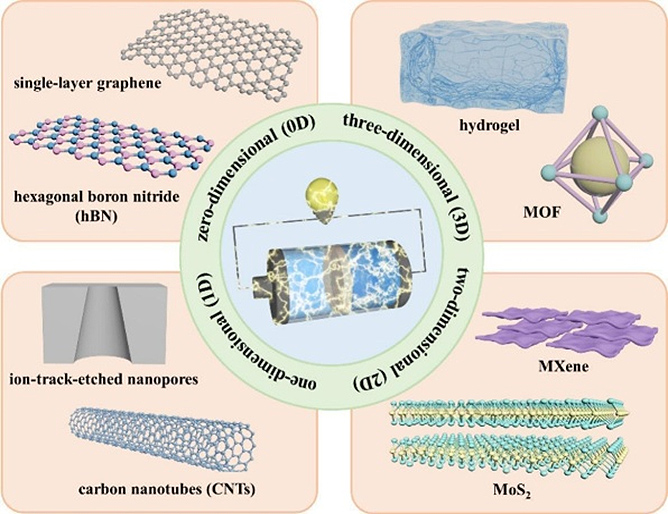
1. This review consolidates two decades of nanofluidic membrane progress, covering governing electrokinetic mechanisms (EDL regulation, ion selectivity, ionic current rectification) and providing multidimensional classification by channel dimensionality, material, structure, and wall properties.
2. Fabrication strategies and modeling approaches are critically compared, identifying persistent barriers: scalable manufacturing of well-defined nanochannels, stability/fouling resistance, and lack of standardized performance metrics.
3. By integrating mechanism, architecture, and fabrication with performance limitations, an actionable framework is provided to accelerate translation of nanofluidic membranes into practical ion separation, energy conversion, and sensing technologies.
主要貢獻
1. 本綜述彙整二十年奈米流體薄膜研究進展,涵蓋主導電動力學機制(電雙層調控、離子選擇性、離子電流整流)並依通道維度、材料、結構與壁面性質提供多維度分類。
2. 批判性比較製備策略與建模方法,識別持續性障礙:明確奈米通道的可擴展製造、穩定性/抗污染性及缺乏標準化性能指標。
3. 通過整合機制、架構與製備至性能限制,提供可操作框架以加速奈米流體薄膜轉化為離子分離、能量轉換與感測的實用技術。